What a hair and makeup artist does
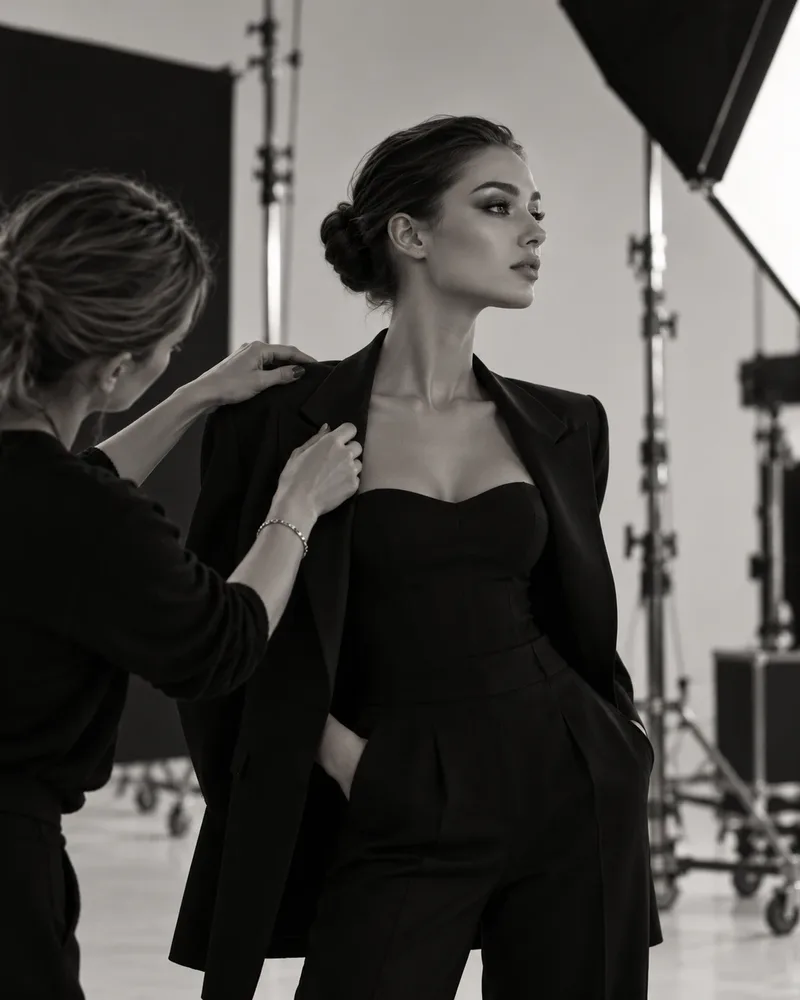
A hair and makeup artist prepares you for camera and keeps the look consistent through the day. They match the plan from the photographer, stylist or client: a natural, fresh face for a skincare brand, strong colour for a fashion story, a sleek bun for a tailored look. They also touch up between looks and between frames.
Sometimes two people share the work, one for hair and one for makeup. On a small shoot one person may do both.
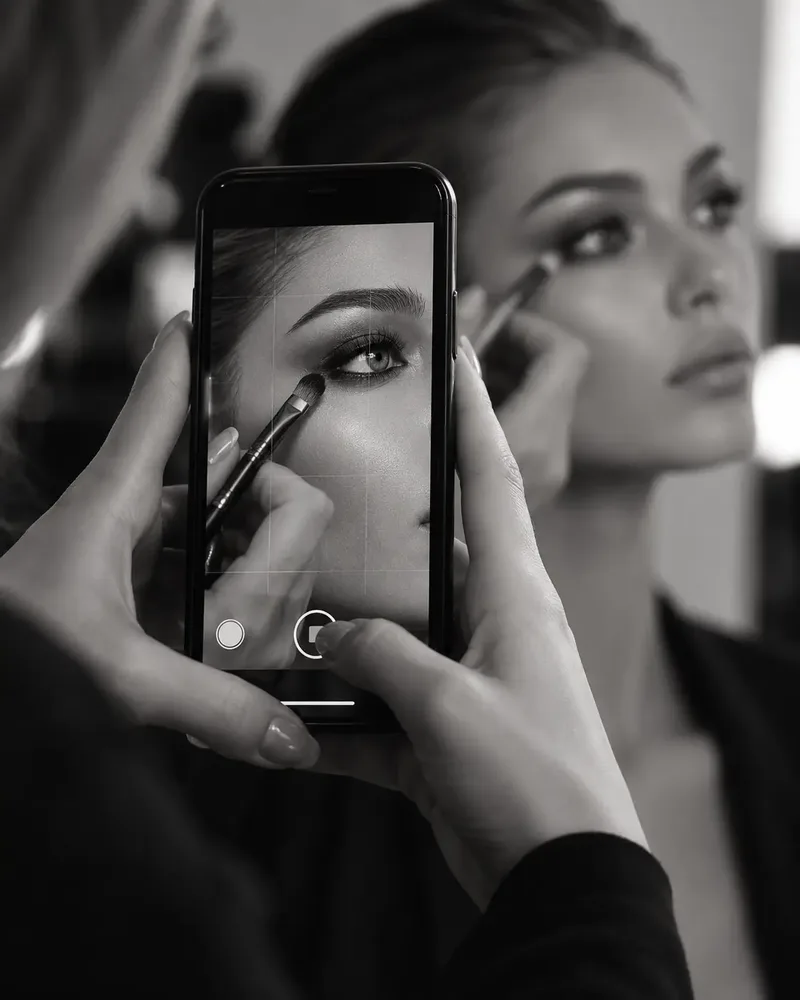
How to arrive prepared
- Clean skin. Wash your face and moisturise lightly. Do not arrive in a full face of makeup unless asked, because it takes time to remove and can irritate the skin.
- Clean, dry hair, free of heavy products. A stylist can add what the look needs. Heavy gel, oils or sprays make it harder to start fresh.
- Hair as it naturally is. Do not cut, colour or try a new treatment just before a shoot.
- Nails clean and tidy. Hands often appear in photos.
- Wear a top that opens at the front or pulls off easily. This keeps makeup and hair from being smudged.
Check the call sheet in case it has specific instructions. If you are unsure, ask the person who booked you.
What to say to the artist
A short, friendly chat helps everyone:
- Tell them about allergies or sensitive skin. Mention anything you react to before they start.
- Ask what look they are creating. It helps you understand the mood and stay consistent.
- Say if something is uncomfortable. A product that stings, a hair pin that pulls or a lash that irritates: speak up politely.
- Do not decide the look yourself. The plan comes from the client or photographer. If you have a concern, raise it kindly with the artist or the person in charge.
Hair and makeup for digitals and test shoots
Agencies usually want to see your natural features in digitals, so keep makeup minimal or leave it off. Skip heavy filters and heavy contouring. Wear your hair simply, away from your face, so they can see your shape and jawline. For test shoots, ask the photographer what they plan.
What happens in the chair
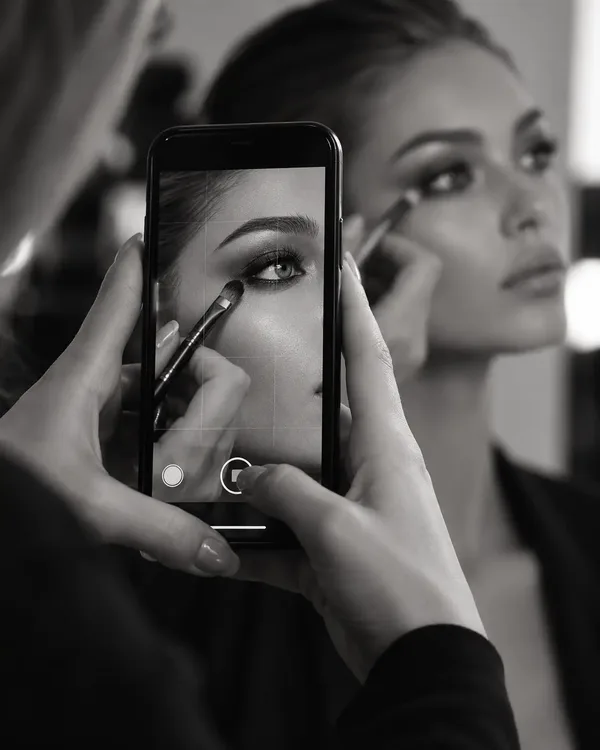
Most sessions start with skin preparation: cleansing, a light moisturiser and sometimes a primer. The artist then builds the look in layers, usually base first, then eyes, cheeks and lips. Hair is often shaped with heat tools or pins, and some looks need a lot of product to hold. It can take from a short half hour for a natural look to well over an hour for a detailed one.
During this time you can usually talk quietly, listen to music or rest. Keep your face relaxed and look where the artist asks. If you need to move, say so first. It is also a good moment to ask what the look is for and to see reference pictures, which helps you stay in the right mood when the photographer starts.
Touch-ups during the day
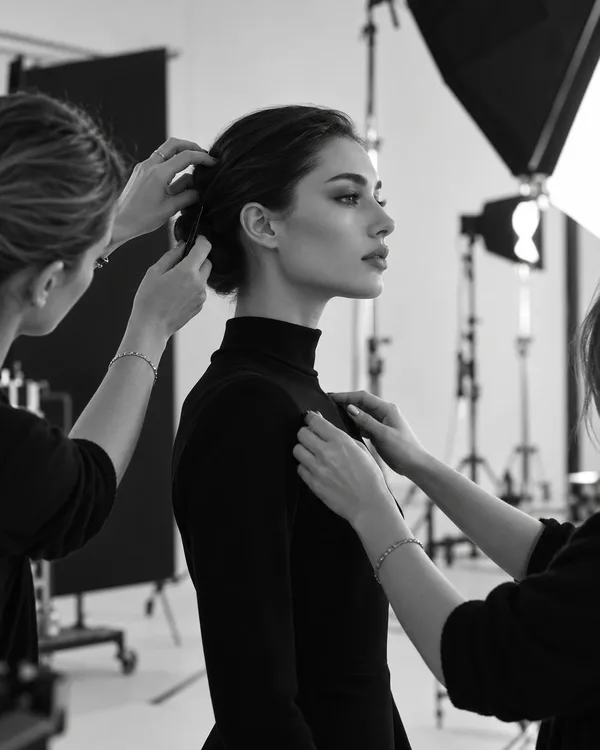
Between setups the artist will return to check shine, lipstick, flyaway hair and creases in the skin. Do not eat or drink anything that stains without telling them, and use a straw when you can. If you need a break, ask, and let the artist know before you wipe your face or run your fingers through your hair. These small habits protect the look and keep the schedule on track.
Removing makeup safely
At the end of the day, take makeup off gently with a cleanser that suits your skin, and moisturise afterwards. Do not scrub, and do not sleep in heavy makeup. If a product irritated your skin, note the name and avoid it, and tell the artist next time.
Keeping your skin and hair healthy
Good camera skin and hair come from simple habits, not products. Drink water, sleep well, remove makeup every night and use sun protection. Avoid trying new products right before a shoot. If you have a skin condition or concern, ask a qualified professional for advice.
Etiquette with the hair and makeup team
- Arrive on time or early. Their schedule affects the whole day.
- Sit still and keep your face relaxed. It helps them work quickly.
- Thank them. They are a big part of how you look and feel on set.
- Do not touch up on your own. Let them handle it so the look stays consistent.
More about behaviour on set is in model etiquette on set.
In short
Hair and makeup are a team effort. Arrive clean and prepared, ask what look is planned and be polite and clear if something is uncomfortable. The free lessons in FYND Academy cover more of what to expect on set.
Frequently asked questions
Should I wear makeup to a photo shoot?
Only if you are asked to. In most cases a professional will do your makeup on set, so arrive with clean skin. For digitals, agencies usually prefer little or no makeup.
Do I need to bring my own makeup?
Often not. Professional artists bring their own kits. Check the call sheet in case it asks you to bring anything.
What if I am allergic to a product?
Tell the artist before they start. They can use a different product or do a patch test.
Can I say no to a hair or makeup style?
You can raise concerns politely if something is uncomfortable or unsafe. For creative choices, remember the look is usually set by the client or photographer.
How should I prepare my hair?
Arrive with clean, dry hair that is free of heavy products. Do not cut or colour it right before the shoot.