How to Pose for Photos as a Model: Beginner's Guide
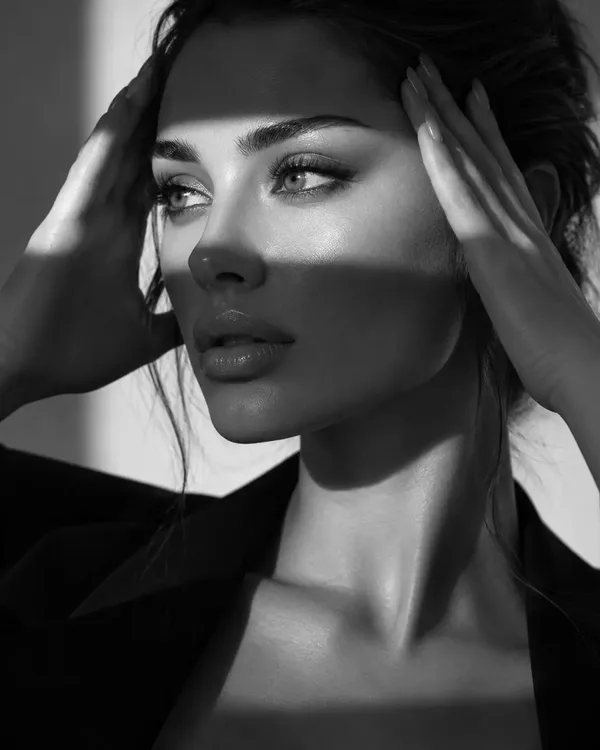
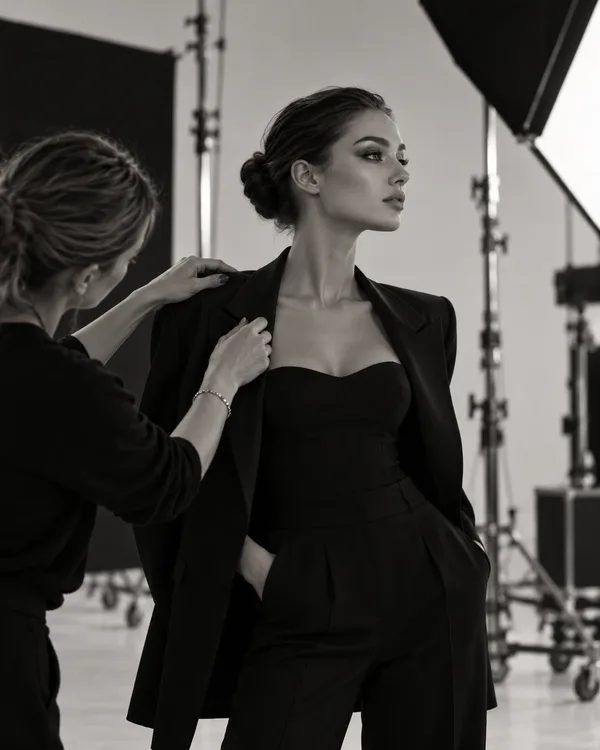
Posing looks effortless in a finished photo, but it is a skill built from small, repeatable choices. The good news is that you can learn the basics at home with a mirror and your phone. You do not need a studio to practise.
This guide covers stance, angles, hands, expressions and how to practise. It is part of the free lessons in FYND Academy and pairs well with what to expect on a photo shoot.
Start with a balanced stance
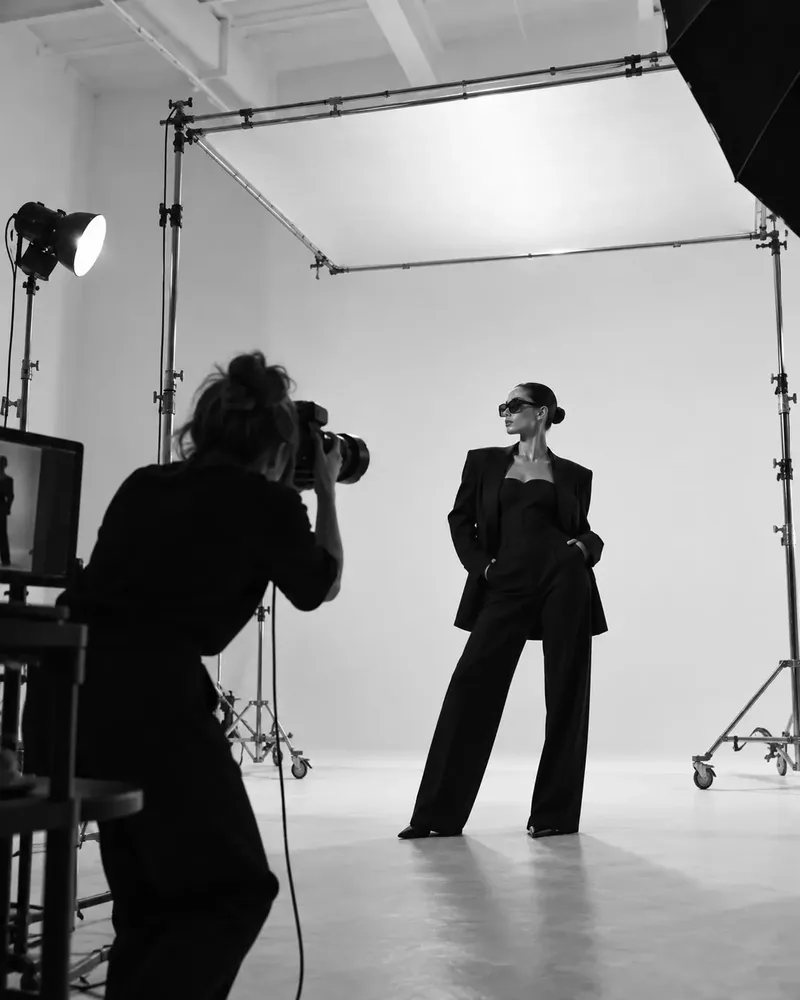
Most poses start from a stable base. Stand with your weight mostly on one leg and the other leg relaxed. This creates a gentle line through your body and stops you looking stiff. Keep your shoulders down and relaxed, and lengthen your neck as if a string is gently lifting the top of your head.
Check your feet. Pointing the front foot slightly toward the camera and the other slightly away often looks natural.
Use angles
Facing the camera square on can look flat. Turn your body slightly, so one shoulder is a little closer to the lens, and then bring your face back toward the camera. Small turns change how light falls on your face and body. Try a few angles and see which are most flattering and which feel comfortable.
Chin, neck and shoulders
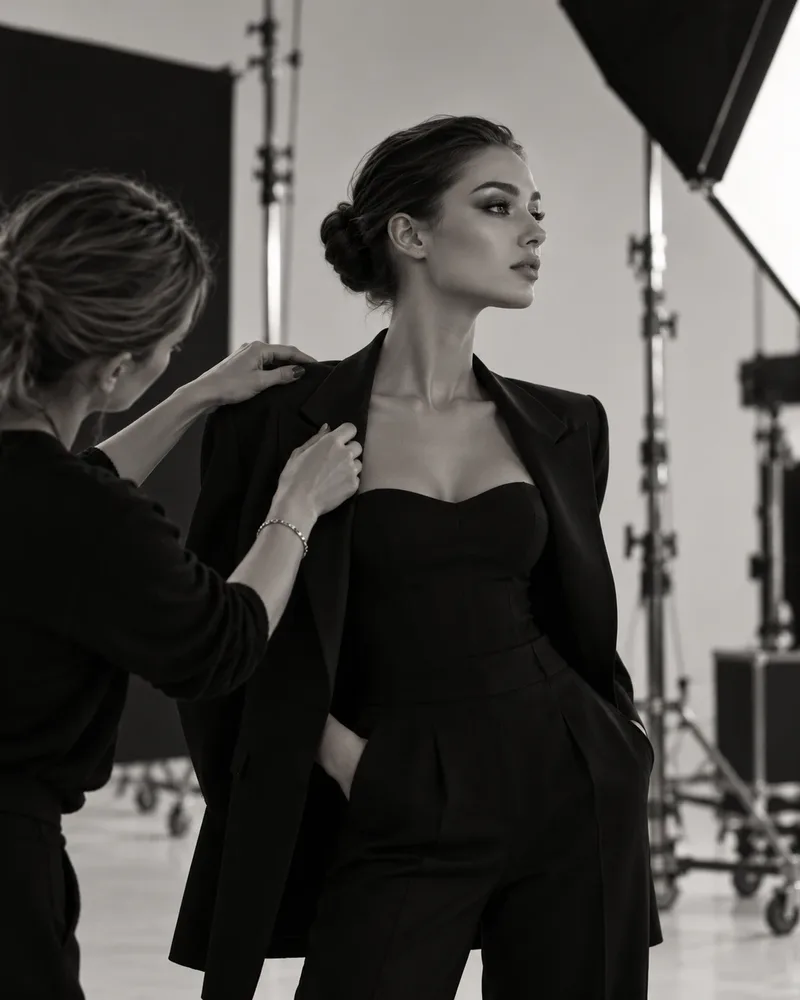
A tiny change in your chin makes a big difference. Lower it slightly and push it forward a little to define your jawline. Keep your neck long and your shoulders relaxed, not raised. Tension often shows in the shoulders first.
What to do with your hands
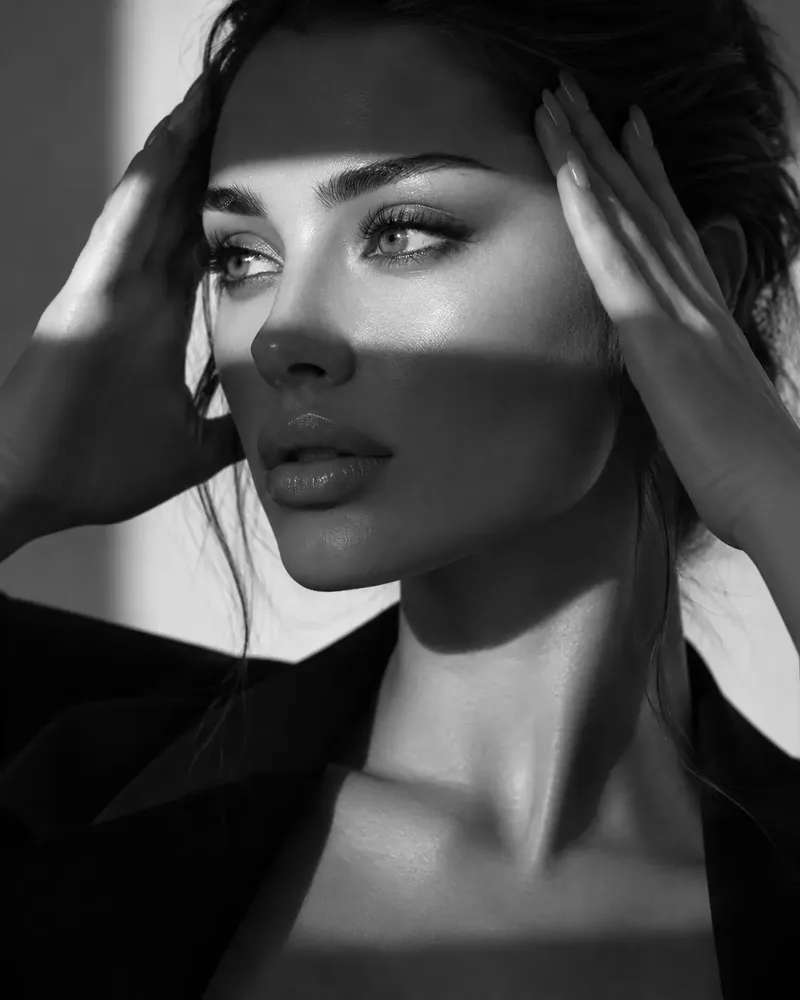
Hands are one of the hardest parts for new models. Keep them relaxed, with soft fingers and a little space between them. Avoid clenched fists or fingers pointing straight at the camera. Give your hands something simple to do: rest one on your hip, touch your hair lightly, hold a jacket lapel or slide one into a pocket.
Expressions and camera presence
A pose is more than a body shape. The expression gives it meaning. Practise a few clear expressions: calm and neutral, soft smile, confident, thoughtful and playful. Think about what you want the viewer to feel, and let it show in your eyes. Relax your jaw and keep your breathing steady.
Looking slightly off camera can create a quiet mood. Looking straight into the lens feels direct. Try both and film yourself so you can see what works.
Practise at home
- Use a mirror. Notice how small changes affect your shape and face.
- Film yourself. Record a short clip, move slowly between poses and watch it back.
- Practise a handful of poses. Build a small set you can repeat, then vary each by changing the angle, the hands or the expression.
- Mimic photos you like. Study a photo, then try to reproduce the pose. You will learn how it was built.
- Practise moving. Photographers want movement, not rigid positions. Shift smoothly from one pose to the next.
Posing for different kinds of work
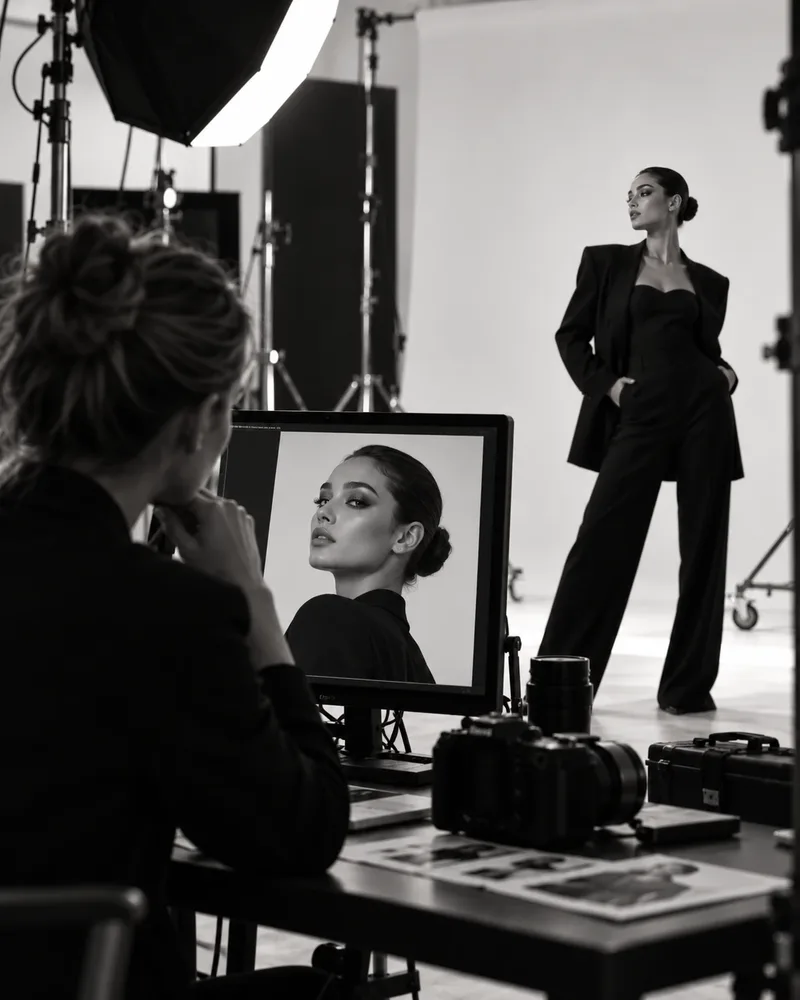
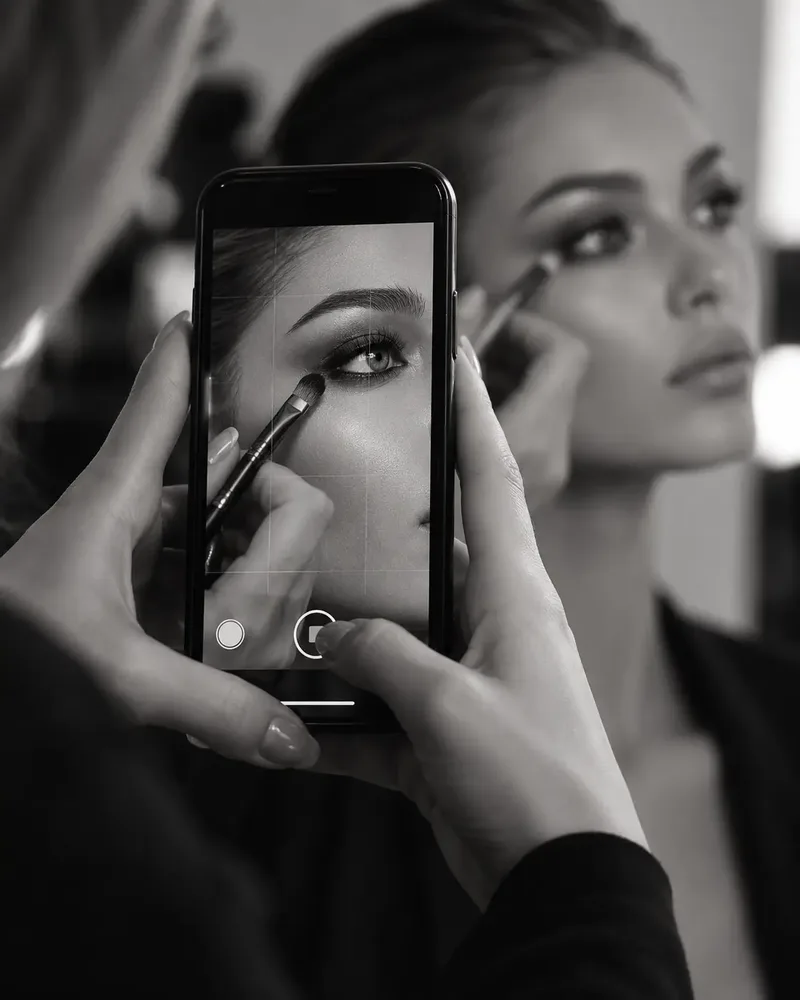
The same body works differently depending on the job. For commercial photos, keep movements open and friendly, with warm eyes and relaxed shoulders. For editorial and fashion, think in shapes: strong lines through the arms and legs, a clear head position and an intent expression. For full-length and runway-style pictures, stand tall, keep the line from your head through your spine and choose a clear stance with the weight on one leg. For close beauty shots, small movements of the chin and eyes matter most, so slow down and move in small steps.
Learning what a client wants before the shoot helps you choose the right style. Ask for a brief or reference images when you can, and read about the types of modeling so you know what each one expects.
Common mistakes
- Holding your breath. It makes you tense. Breathe and relax.
- Locking your knees. Soften them slightly.
- Stiff, flat hands. Keep them relaxed.
- A fixed, tense smile. Let it come from a thought or a breath.
- Forgetting your shoulders and neck. Check them often.
A simple warm-up routine
Before you practise or shoot, spend a minute loosening up. Roll your shoulders, shake out your hands, tilt your head gently from side to side and take a few slow breaths. Smile and relax your jaw. A warm body and a calm face make every pose easier, and photographers notice when a model arrives ready to move.
Posing when you are tired or nervous
Nerves and tiredness show quickly in the face and hands. If you feel tense, slow down, drop your shoulders and breathe out before the next frame. It is fine to ask for a short break. Drink some water, shake out your arms and reset. A calm, steady model gives the photographer more to work with than a rushed one.
Taking direction
On a real shoot, the photographer will guide you. Listen, make the change and ask if you need clarification. A confident, flexible model who adjusts quickly is easy to work with. If you are not sure what is wanted, ask whether they want your chin higher or your body turned a little more
Use your best poses on your card
When you have photos with strong posing, pick the best frames for your comp card. Check comp card photos to see which shots to choose, and start with clean digitals if you do not yet have professional pictures.
Good posing is practised, repeatable control. Start with a balanced stance, play with angles and keep your hands and face relaxed. For more step-by-step lessons, open the free FYND Academy.
Frequently asked questions
How do I learn to pose as a model?
Practise at home with a mirror and your phone. Learn a balanced stance, a few angles, relaxed hands and a handful of expressions, then film yourself and adjust.
Do I need to know many poses?
No. A small set of poses you can repeat and vary is enough to start. Photographers will direct you on the day.
What do I do with my hands in photos?
Keep them relaxed and give them a simple job, like resting on your hip, touching your hair or holding a jacket. Avoid clenched fists.
How do I look natural in photos?
Relax your jaw, breathe, and think about a specific feeling. Practise until the pose feels easy and then let your face respond naturally.
Should I smile in modeling photos?
It depends on the type of work. Commercial work often uses warm smiles, while editorial work often uses a more serious or neutral expression. See types of modeling.