TalentSign up for free todayAgenciesScout, message and book, free to start

Free for models and talent

Model comp card
examples

Seven model comp card layouts, side by side: what each one suits, and how to make yours in minutes. Every design is free to use on FYND.

Create your free cardHow it works

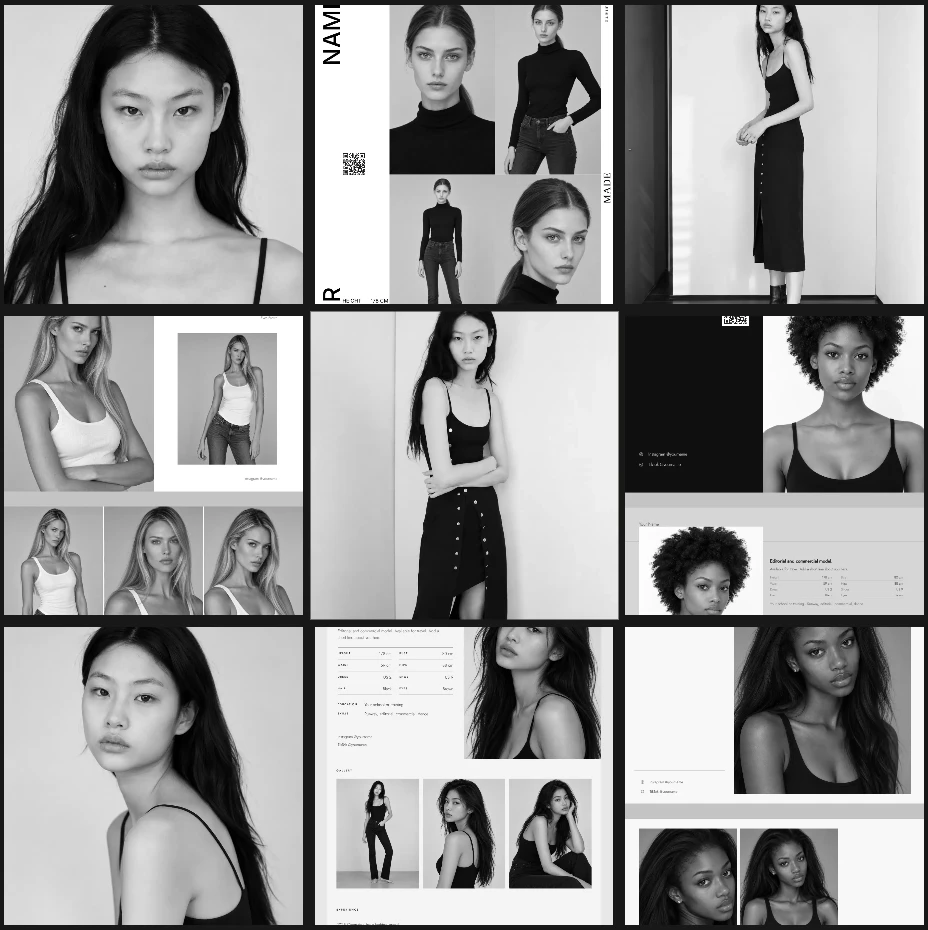
A grid of model comp card examples in different layouts: close-up portraits, a composite sheet, a full-length photo, a studio card and a dark noir card

What makes a good model comp card example?

A good model comp card is easy to read in a few seconds. It has one strong main photo, two to four more that show range, honest measurements and a clear way to reach you, with space around everything. The layouts below follow that rule in seven different ways, so you can match the layout to the photos you have.

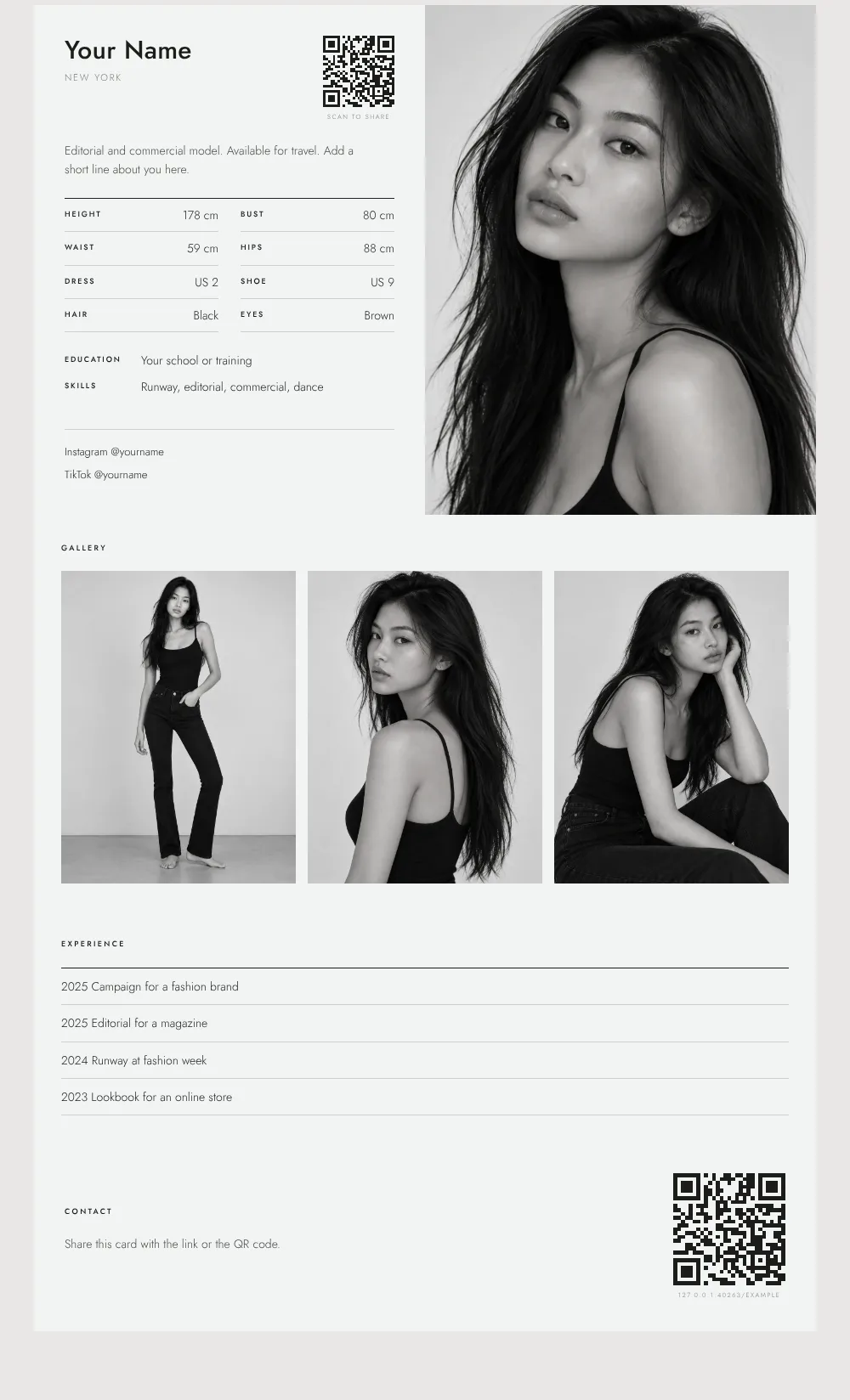
Classic comp card example: one large portrait, smaller photos and details underneath

Classic

Best for: New models, and anyone with a normal set of three to five photos

A single page with one large portrait, a row of smaller photos and your details in sections underneath. It is the safest choice and the right place to start if you are new. Agencies know how to read it at a glance.
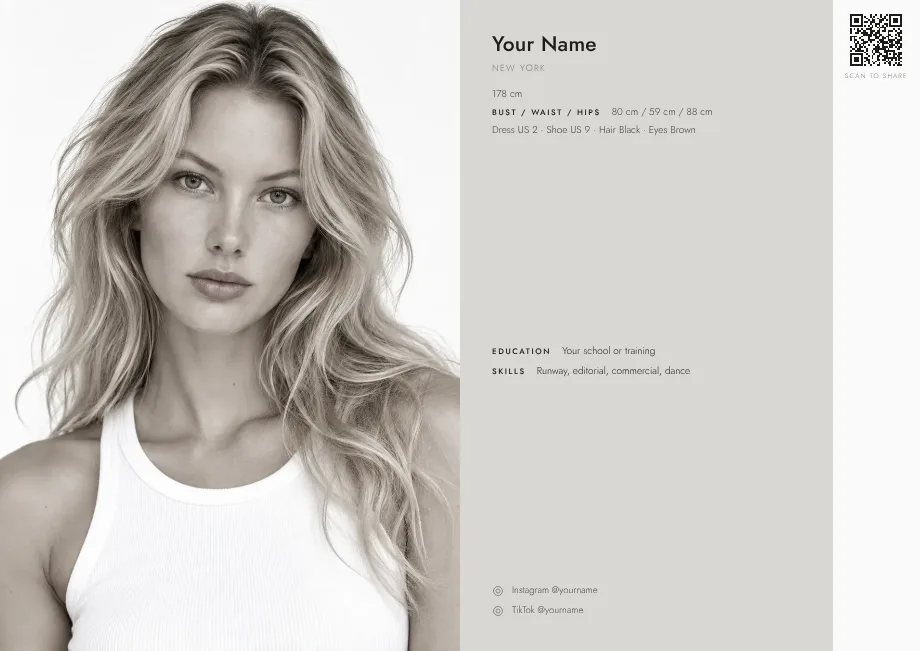
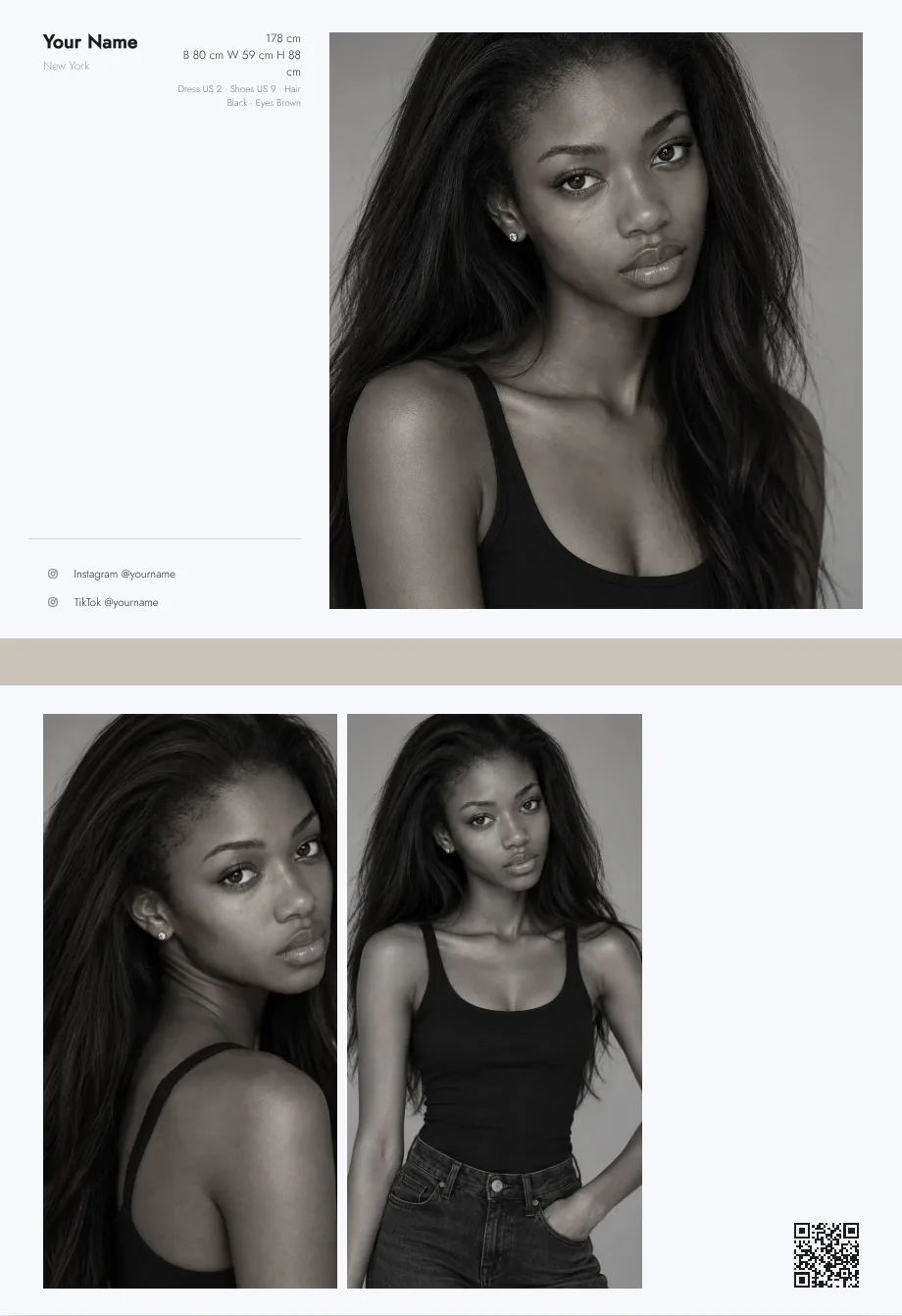
Studio comp card example: a large portrait beside a quiet panel of details

Studio

Best for: One strong photo and a short list of numbers

A large portrait on one side and a quiet panel of details on the other. It suits models with one standout photo and a short list of numbers, and it looks good on a phone.

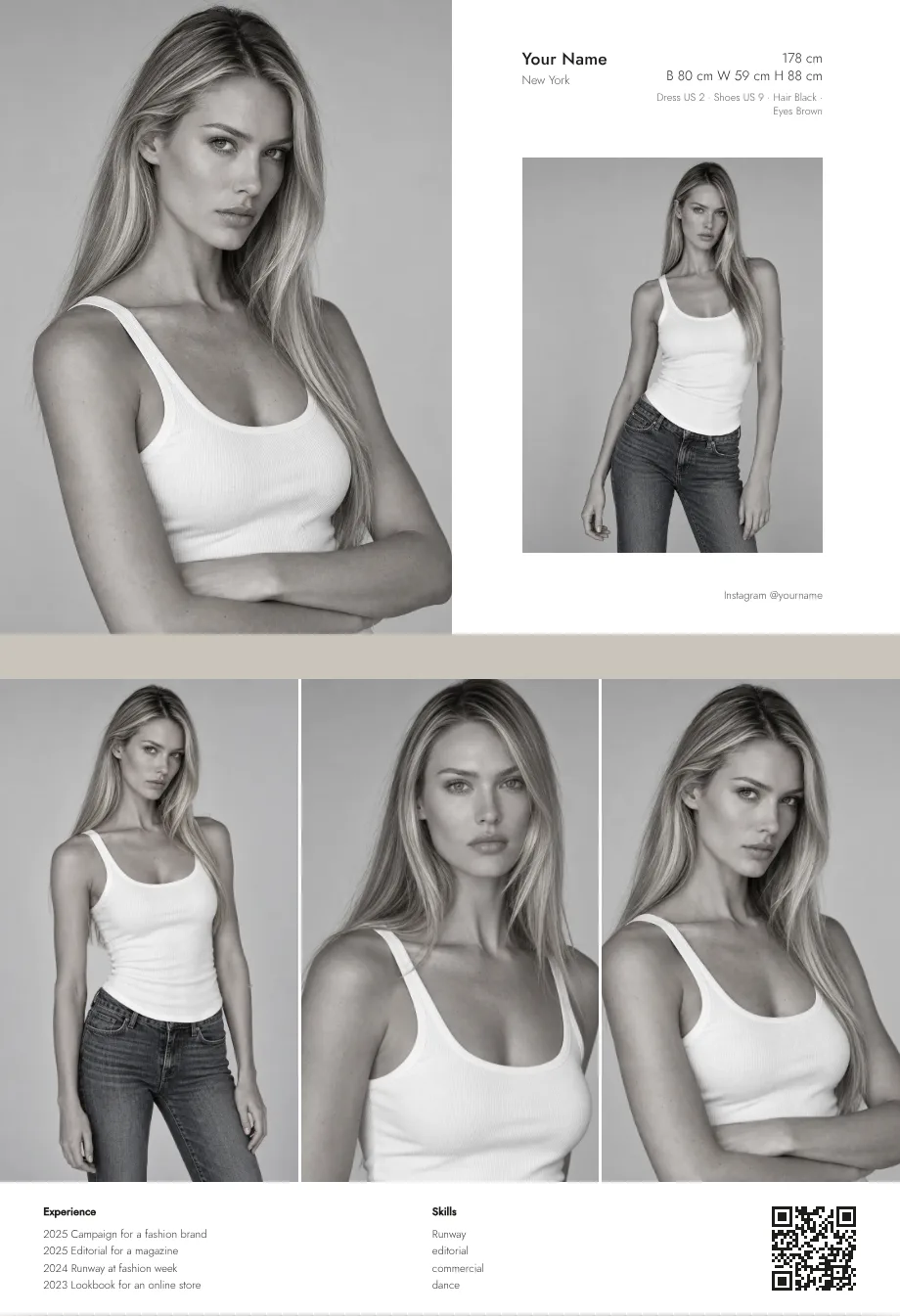
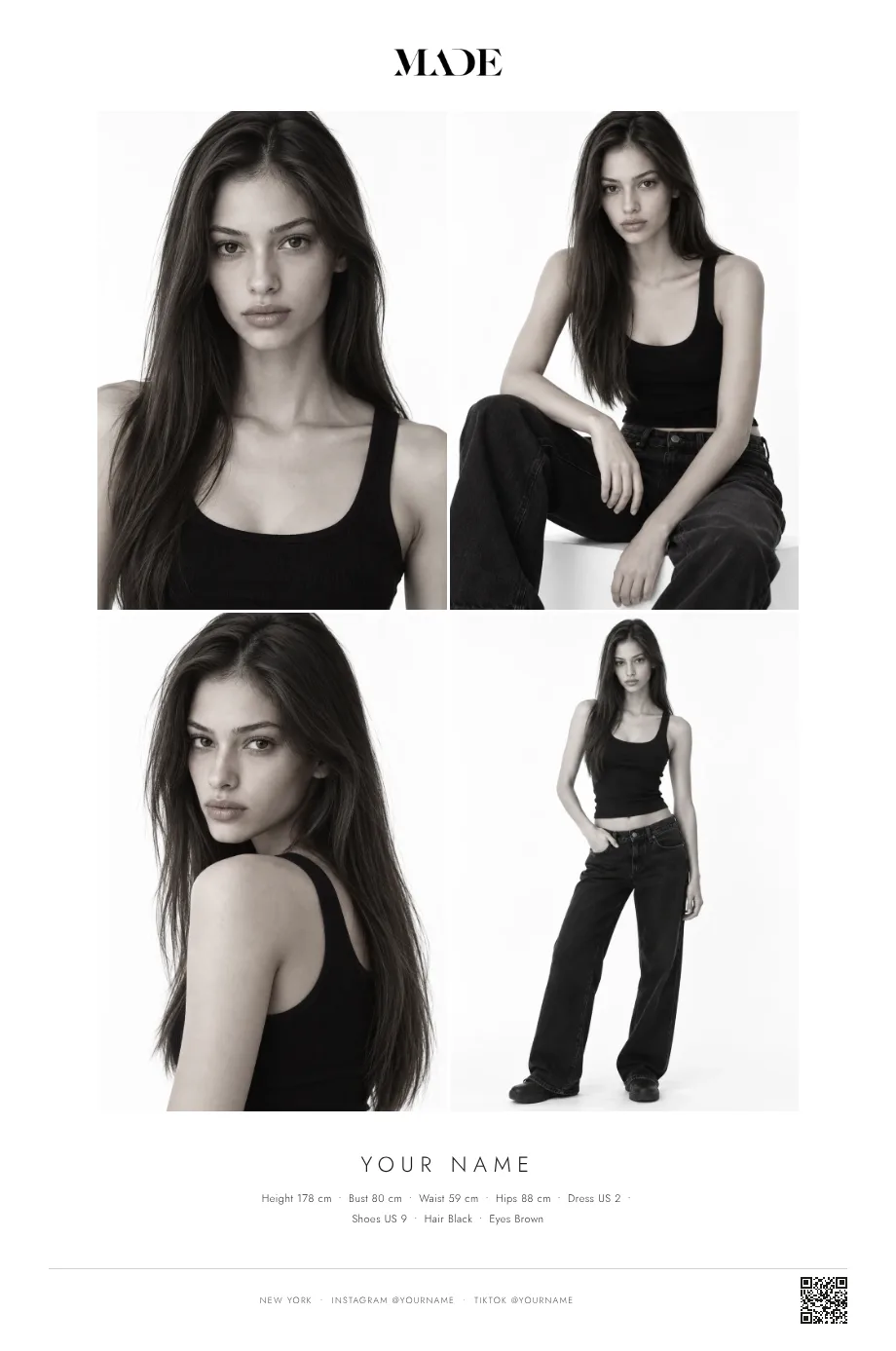
Composite comp card example: a grid of photos like a printed agency composite

Composite

Best for: Four or five strong photos that show range

A grid of images in the style of a printed agency composite. It is best when you have four or five strong photos that show range, from a close-up to a full-length shot.

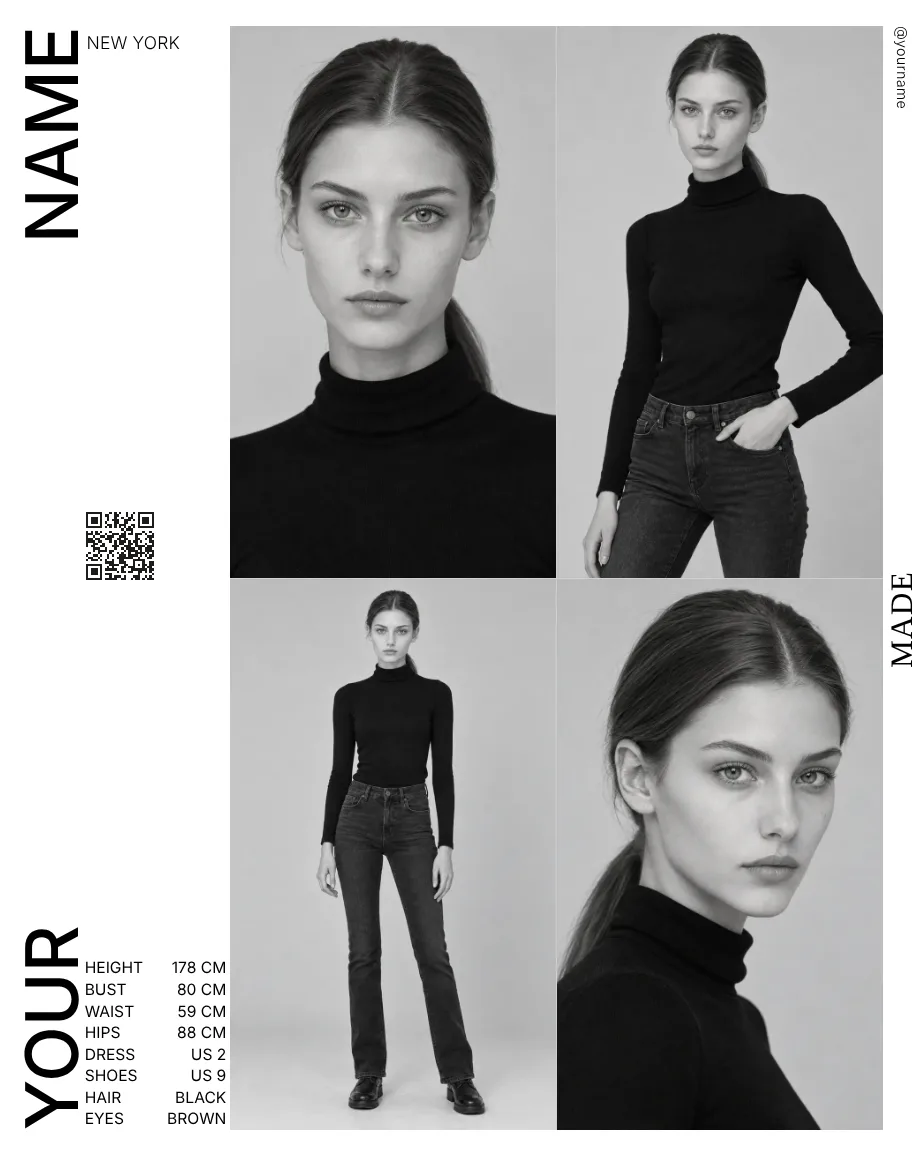
Editorial comp card example: a tall name beside photos set like a magazine spread

Editorial

Best for: Styled, magazine-like photos

A tall name down the side with photos set like a magazine spread. Use it when your photos are more styled and you want the card to feel like a fashion page.

Portrait comp card example: built around a single image

Portrait

Best for: One excellent headshot

Built around a single image. It works when you are early in your career and have one excellent headshot rather than a full set.

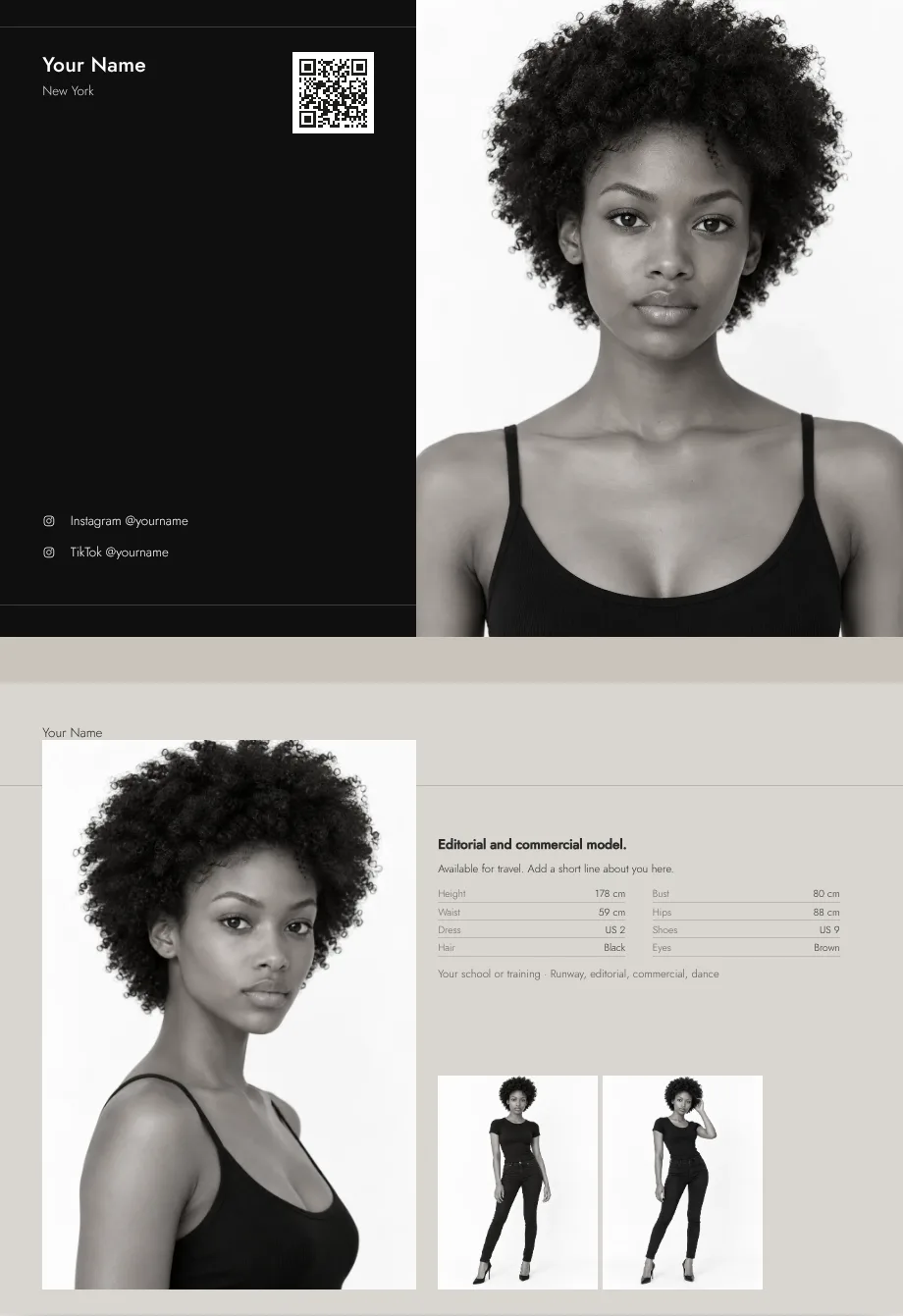
Noir comp card example: a dark layout with a strong portrait

Noir

Best for: Dramatic black and white photos

A dark layout with a strong portrait. It suits dramatic black and white photos, but check that your measurements and contact details stay easy to read.

Minimal comp card example: lots of white space and very little else

Minimal

Best for: Clean digitals and a calm look

Lots of white space and very little else. It is a good choice for models whose photos are clean digitals and who want the card to feel calm.

What every good example has in common

Model comp card example questions

What does a good model comp card example look like?

A good example has one strong main photo, two to four more that show range, honest measurements and a clear way to reach you, laid out with plenty of space. It is easy to read in a few seconds and looks like you today.

Which comp card layout should I choose?

Start with Classic if you are unsure. Choose Studio or Portrait if you have one standout photo, Composite if you have four or five strong ones, Editorial for styled photos, Noir for dramatic black and white and Minimal for clean digitals. You can switch designs at any time without losing your details.

Can I copy these model comp card examples?

Yes. Each design is a layout you fill in with your own photos, measurements and contact details on FYND, free. The designs are the template; the photos and details are yours.

How many photos do the examples use?

Three to five is typical: a main photo plus a full length, a profile or three-quarter view and one that shows a different mood. Portrait uses a single image, and Composite works best with four or five.

Are these examples real models?

No. The pictures show sample comp cards with demo photos and invented details, so you can see each layout. Your own card uses your photos and your details.

Make your own model comp card

Pick a layout, add your photos and numbers, and share it by link, QR code or A4 PDF. It takes a few minutes and costs nothing.

Create your free card

Agency? See what FYND does for agencies.

Read the steps